
Gum Grafting: The Foundation Your Implants Deserve
Your smile is worth protecting. When gum recession enters the picture, the stakes get even higher. At St. Louis County Dental, Dr. Barry Brace and our experienced team understand that healthy gum tissue isn’t just cosmetic. It’s the living framework that holds your teeth, your dental implants, and your confidence in place. If you’ve been told you have receding gums or aren’t a candidate for implants due to soft tissue concerns, gum grafting may be the step that changes everything. Call us today at 314-762-6784 to schedule your $1 consultation with our St. Louis, MO, implant dentists, where we welcome patients from Kirkwood, Woodbine, Clayton, and beyond.
Meet the Team Behind Your Care
At St. Louis County Dental, Dr. Barry Brace, Dr. Tim Grayem, and Dr. Dan Bialecki bring decades of combined experience to every patient’s journey. Dr. Brace earned his dental degree from the Washington University School of Dental Medicine and holds an active Fellowship in both the Academy of General Dentistry and the International Congress of Oral Implantologists. Dr. Grayem, a University of Missouri – Kansas City graduate who scored in the top 5% of the nation on his Dental Board exams, is certified in oral conscious sedation and has spent 15 years crafting beautiful smiles for St. Louis patients. Dr. Bialecki trained at the University of Michigan and completed advanced graduate studies at Boston University, bringing a strong commitment to patient education and comfort to every visit.
What Is Gum Grafting?
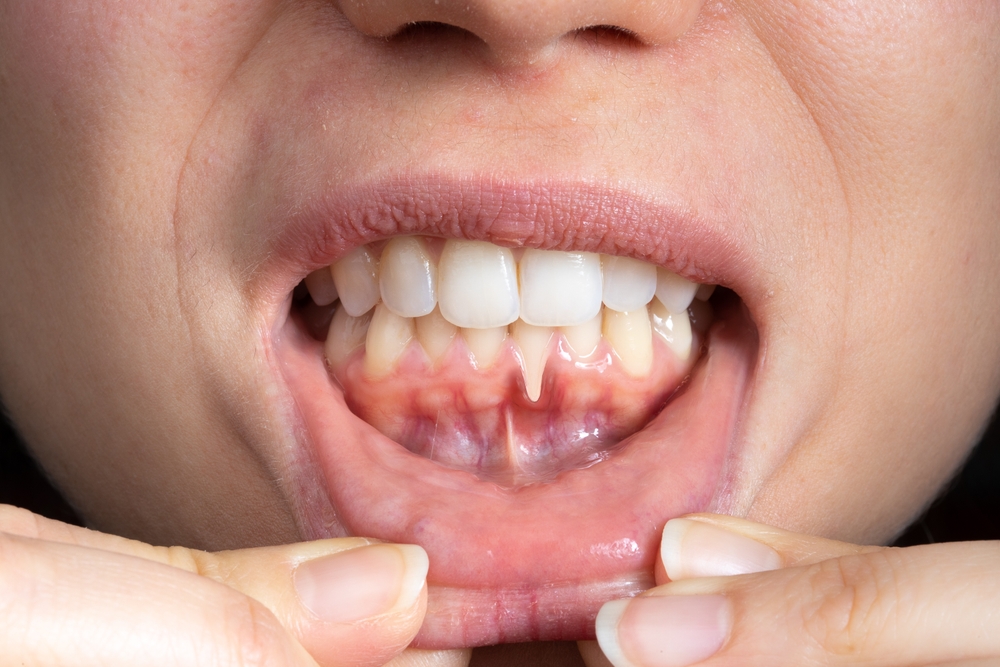
Gum grafting, also called a soft tissue graft, is a surgical procedure that adds gum tissue to areas where recession has occurred. The tissue can come from the roof of your mouth (a connective tissue graft or free gingival graft) or from processed donor tissue, depending on your anatomy and the degree of recession.
The goal is to increase the zone of attached gingiva: the firm, stable gum tissue that anchors to the bone and protects the underlying root structure. Without adequate attached gingiva, teeth and implants alike are vulnerable to bacterial infiltration, bone loss, and long-term instability.
In implant dentistry specifically, gum grafting serves a dual purpose. It rebuilds what the recession has taken away, and it creates the tissue architecture needed to support a prosthetic tooth that looks and functions naturally.
Why Gum Recession Happens, and Why It Matters for Implants
Gum recession doesn’t happen overnight. It’s often the cumulative result of several factors that St. Louis patients deal with regularly:
- Periodontal disease is the most common driver. As bacterial plaque accumulates below the gumline, it triggers an inflammatory response that gradually destroys gum tissue and bone. Left untreated, this same disease process that causes gum recession also leads to tooth loss, which is why so many patients seeking implants at St. Louis County Dental arrive with both concerns at once.
- Aggressive brushing wears away the gingival margin over time, particularly along the facial surfaces of canines and premolars.
- Thin gingival biotype is a genetic predisposition that leaves some patients more susceptible to recession regardless of their oral hygiene habits.
- Orthodontic tooth movement, previous dental trauma, or a high frenum attachment can also contribute.
Here’s the critical connection to implant dentistry: the same conditions that cause recession—particularly bone loss from gum disease—also compromise implant candidacy. When Dr. Barry Brace evaluates a patient in our St. Louis dental office, he’s looking at the full picture. Are there enough bone and soft tissue to support an implant long-term? If gum recession is present, the answer often requires grafting before implant placement can proceed.
Gum Grafting and Implant Success: What the Research Tells Us
An implant placed into a site with inadequate soft tissue is at risk. Studies in periodontics have consistently shown that a minimum band of keratinized (attached) gingiva around an implant is associated with better long-term outcomes, including lower rates of peri-implantitis — the implant equivalent of gum disease.
When soft tissue is deficient at an implant site, several problems become more likely:
 Peri-implant mucositis and peri-implantitis: Without attached gingiva forming a protective seal, bacteria can work their way under the gum margin, initiating an inflammatory cascade that destroys bone around the implant.
- Aesthetic compromise: A thin or absent band of gum tissue around an implant crown creates an unnatural appearance. Patients may see dark shadows at the gumline, an irregular contour, or exposed implant hardware over time.
- Patient discomfort. Sites with thin or mobile mucosa (non-attached tissue) are more sensitive to brushing and eating, making maintenance difficult.
- Recession progression. Mobile tissue around an implant tends to continue receding, compounding the problem with each passing year.
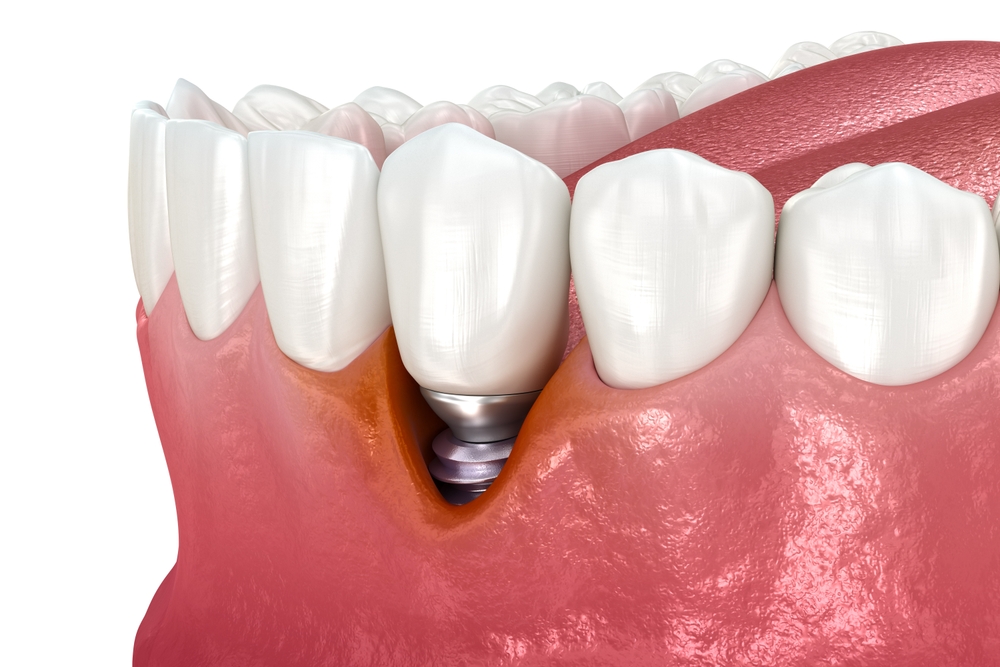
Gum grafting before implant placement addresses these risks before they become a reality.
The Gum Grafting Procedure at St. Louis County Dental
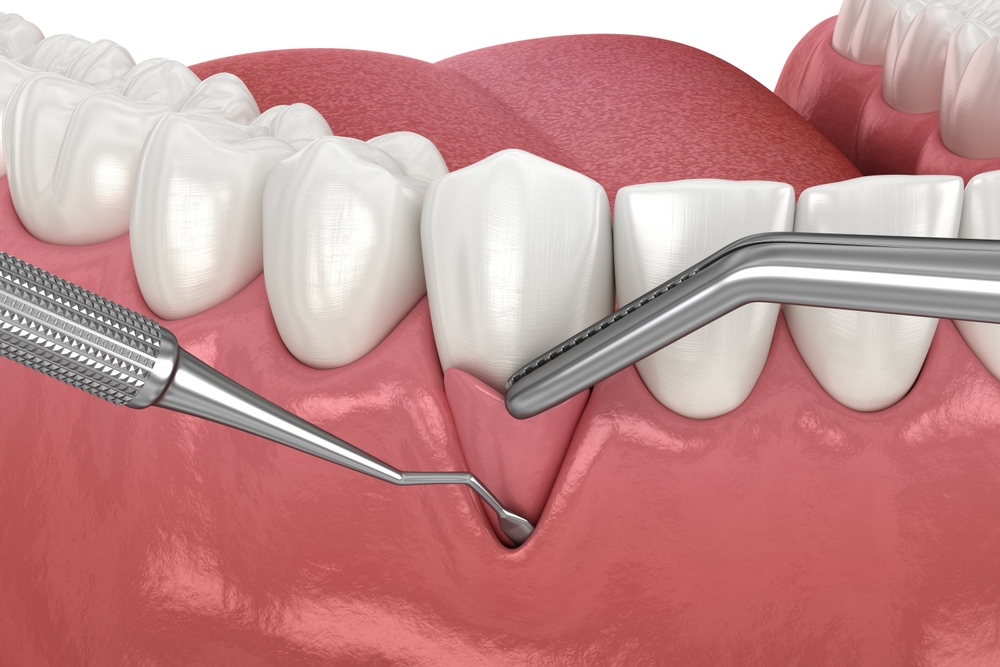 Dr. Barry Brace performs gum grafting with precision informed by advanced 3D imaging technology. Before your procedure, our team uses this imaging to evaluate the bone structure beneath the gum, map the extent of recession, and plan the graft placement for the most predictable outcome.
The procedure itself is typically performed under local anesthesia. Patients with dental anxiety may also benefit from oral conscious sedation, a service available through our team that makes the experience far more comfortable. Dr. Tim Grayem is certified to administer oral conscious sedation and has helped countless St. Louis patients feel at ease throughout their treatment.
Common Graft Types
- Connective tissue graft (subepithelial graft): The most widely used technique. A small flap is created in the palate, and connective tissue from beneath the surface layer is harvested and sutured to the recipient site. The palatal flap is then closed. This method is highly effective for covering exposed roots and building gum volume.
- Free gingival graft: A thin strip of tissue is taken directly from the palatal surface and placed at the graft site. This is often used when the goal is to increase the width of attached gingiva rather than to cover recession.
- Allograft (donor tissue): Processed tissue from a tissue bank eliminates the need for a second surgical site, making recovery more comfortable for some patients. Dr. Brace will discuss whether this option is appropriate for your case.
After grafting, the new tissue is sutured in place, and a protective dressing may be applied. You’ll receive detailed post-operative instructions from our St. Louis team to support healing and protect your results.
Recovery After Gum Grafting
Most patients return to light activity within a day or two, though some swelling and mild discomfort are common for the first week. You’ll be asked to follow a soft food diet for one to two weeks and avoid disturbing the graft site during brushing. Our team schedules follow-up visits to monitor healing and address any questions you have along the way.
Healing is gradual. The graft integrates with the surrounding tissue over several weeks, and full maturation can take a few months. Once stable, your graft will be assessed before implant placement is scheduled, giving your smile the strongest possible foundation.
The Costs of Gum Grafting Treatment
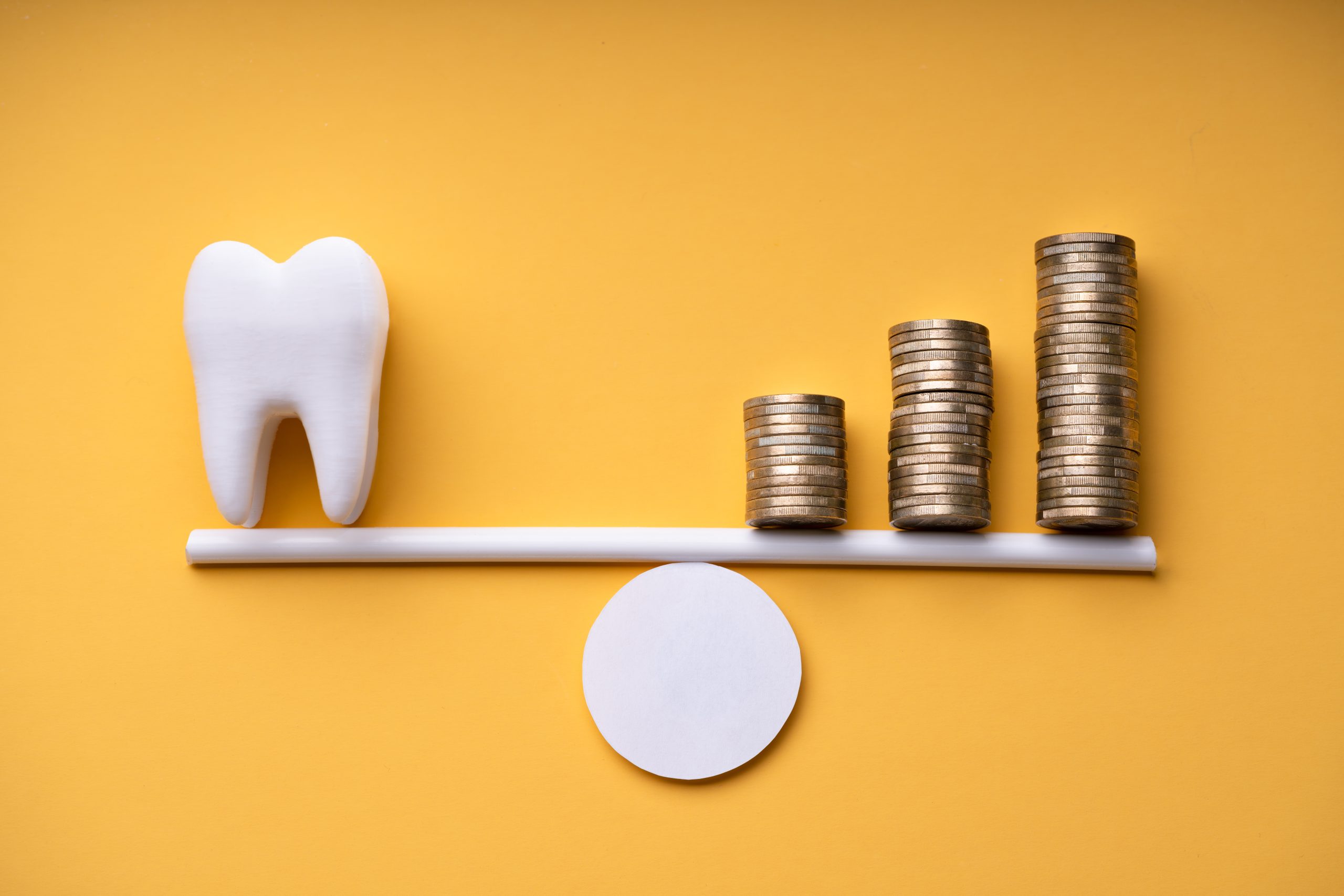 Gum grafting costs typically range from $600 to $3,000 per tooth, with the final price depending on several key factors, including the type of graft, the complexity of the procedure, the dentist’s expertise, geographic location, and whether additional treatments are required. Most dental insurance plans cover a portion of the procedure, usually around 50%, which can help mitigate the out-of-pocket expenses for patients seeking to improve their oral health and prepare for dental implants.