Sinus Lift Surgery: Opening the Door to Upper Jaw Implants
 For patients who’ve lost teeth in the upper back of the mouth, dental implants can feel frustratingly out of reach, not because of anything they’ve done wrong, but because of anatomy. The upper posterior jaw presents one of the most common structural challenges in implant dentistry: the maxillary sinuses sit just above this region, and when a tooth is lost there, the bone beneath them tends to disappear quickly. The result is a site that simply doesn’t have enough vertical bone height to securely anchor an implant.
That’s exactly what a sinus lift is designed to address. At St. Louis County Dental, Dr. Barry Brace performs sinus lift procedures with precision, using advanced 3D imaging to visualize every millimeter of your sinus anatomy before surgery begins. If you’ve been told implants aren’t possible because of insufficient upper jaw bone, we want you to hear this clearly: there’s likely a path forward. Call our St. Louis, MO, dental office today at 314-762-6784 to schedule your $1 consultation. We welcome patients from throughout the area, including Kirkwood, Woodbine, and Clayton.
The St. Louis County Dental Team
Drs. Barry Brace, Tim Grayem, and Dan Bialecki bring a combined 35-plus years of experience in implant dentistry to every patient at St. Louis County Dental. Dr. Brace’s active Fellowship in the International Congress of Oral Implantologists reflects an ongoing commitment to the field, including the evolving science of bone grafting and sinus augmentation. Our St. Louis team stays current with the latest surgical techniques and continues their education year after year so that patients receive care grounded in the most up-to-date evidence available.
At our office on S. Kirkwood Rd, we’ve built a practice where Clayton neighbors, Woodbine residents, and Kirkwood families alike feel genuinely cared for, not like a number in a waiting room.
Why the Upper Jaw Loses Bone
The maxillary sinuses are air-filled cavities located on either side of the nose, extending downward toward the upper jaw. In patients with a full set of teeth, the roots of the upper molars and premolars sit near the sinus floor, sometimes very close, sometimes touching. When those teeth are lost, two things happen simultaneously:
- The bone beneath the sinus begins to resorb. Without the stimulation of a tooth root (or implant), the body gradually reabsorbs the jawbone. This process can begin within months of tooth loss and continue for years.
- The sinus cavity may expand (pneumatization). As the bone below the sinus decreases, the sinus floor can migrate downward, further reducing the available bone height for an implant.
The same processes that lead to tooth loss—advanced gum disease, trauma, or long-standing decay—accelerate bone resorption. Patients who have been missing upper back teeth for several years often arrive at our St. Louis office with significantly diminished bone volume. For these patients, implant placement without a sinus lift would put the implant dangerously close to or inside the sinus cavity, risking perforation, infection, and implant failure.
How a Sinus Lift Works
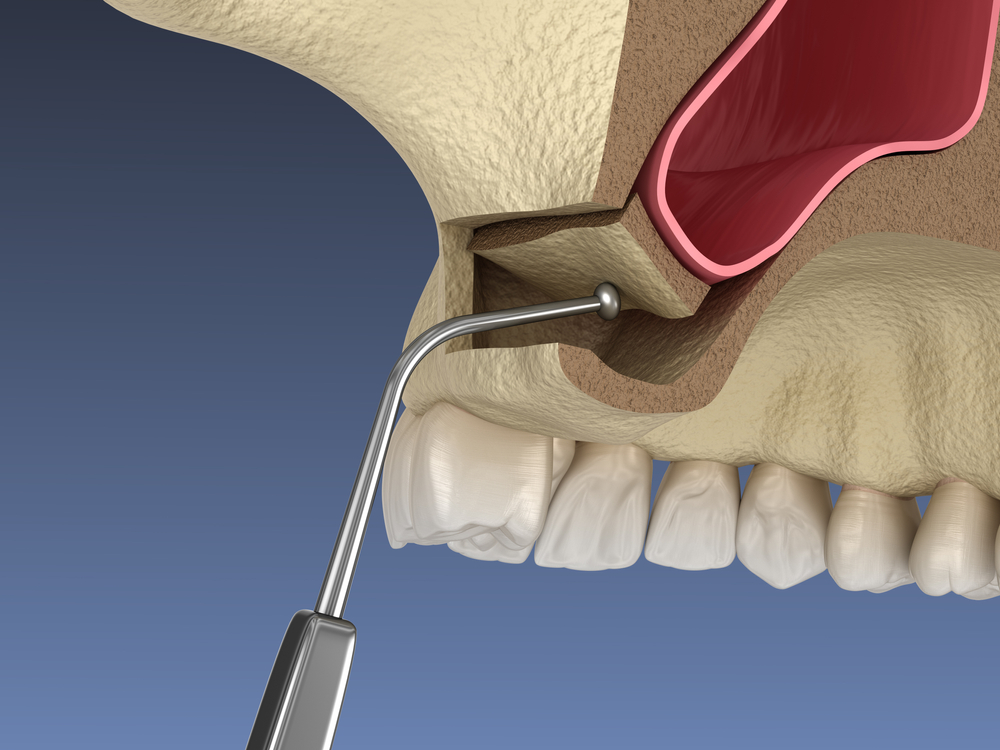 A sinus lift, technically called sinus augmentation, is a surgical procedure that adds bone graft material to the floor of the maxillary sinus, increasing vertical bone height so an implant can be placed safely.
Dr. Brace performs this procedure through a small window created in the lateral wall of the upper jaw. The sinus membrane is gently lifted upward, creating a space beneath it. Bone graft material is then carefully packed into this space, and the window is closed and sutured.
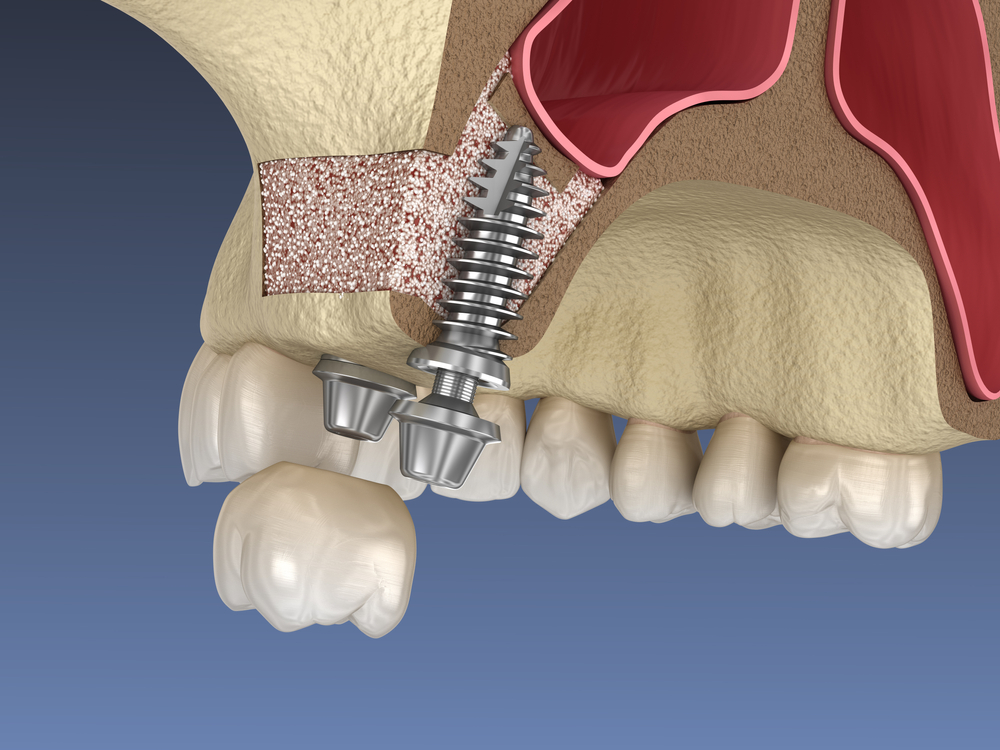
Over the following months, the graft material undergoes a process called osseointegration, gradually fusing with your natural bone to create a dense, stable foundation. Once healing is complete and bone density is confirmed through follow-up imaging, implant placement can proceed.
Bone Graft Materials Used in Sinus Lifts
- Autograft: Bone harvested from another site in your own body, often considered the gold standard for graft integration. The tradeoff is a second surgical site.
- Allograft: Donor bone from a tissue bank, processed to be safe and biologically compatible. It eliminates the need for a second harvest site.
- Xenograft: Bone derived from an animal source (typically bovine) that has been processed for human use. Widely studied and commonly used in sinus augmentation.
- Synthetic bone substitutes: Biocompatible materials designed to support new bone growth. These can be used alone or in combination with other graft types.
Dr. Brace will review which option makes the most sense for your anatomy, health history, and treatment timeline during your consultation.
The Connection Between Tooth Loss and Sinus Complications
Many patients are surprised to learn that gum disease, the leading cause of tooth loss in adults, and sinus problems are more interconnected than they appear. The roots of the upper molars are in such close proximity to the maxillary sinus that severe periodontal infection can sometimes extend into the sinus cavity. Conversely, sinus infections can occasionally manifest as tooth pain in the upper back teeth.
This proximity is precisely why implant placement in the upper posterior jaw requires such careful planning. An implant that inadvertently penetrates the sinus membrane can cause chronic sinusitis, implant failure, and the need for removal and revision surgery. At St. Louis County Dental, our 3D imaging technology maps your sinus floor precisely before Dr. Barry Brace makes a single incision. That preparation makes safe, successful sinus augmentation possible.
Lateral Window vs. Crestal (Osteotome) Technique
There are two primary approaches to sinus augmentation, and the right choice depends on how much bone is already present.
- Lateral window technique: Used when significant bone height is needed (typically when less than 4–5mm of bone remains). This is the more involved approach, creating a window in the lateral sinus wall as described above. It reliably adds substantial bone volume and is the standard approach for cases requiring a large graft.
- Crestal (osteotome) technique: Used when a modest increase in bone height is needed (typically when 5–8mm of bone is already present). In this approach, instruments are inserted through the implant site itself to gently push the sinus membrane upward, and a smaller graft is placed. This is less invasive and can sometimes be performed at the same appointment as implant placement.
Dr. Brace will determine which technique is appropriate based on your imaging and clinical findings.
What to Expect During Recovery
 Sinus lift recovery is generally straightforward when patients follow post-operative instructions carefully. Most patients experience:
Some swelling in the cheek and beneath the eye on the treated side for several days. Mild nasal congestion or light bleeding from the nose is also common in the first day or two. This is normal and no cause for alarm.
You’ll be advised to avoid blowing your nose forcefully, sneezing with your mouth closed, using straws, or any activity that increases sinus pressure, as these can displace the graft before it has a chance to integrate. A soft food diet for one to two weeks helps protect the surgical site.
Follow-up visits allow Dr. Brace and our St. Louis dental team to monitor your healing and confirm graft integration through imaging before scheduling implant placement. Most patients wait four to nine months after a lateral window sinus lift before implant placement, though the crestal approach sometimes allows for same-day or earlier placement.