
Ridge Augmentation: Rebuilding the Foundation for a Stronger Smile
When a tooth is lost, the bone that once surrounded that root begins to disappear. It’s a process most patients never see coming, and by the time they’re ready for a dental implant, the bone they need may no longer be there. Ridge augmentation is the procedure that addresses this directly: rebuilding the alveolar ridge so that implants have the structure they need to integrate fully and last for decades.
At St. Louis County Dental, Dr. Barry Brace approaches ridge augmentation with the same thoroughness and precision he brings to every implant-related procedure because the quality of what’s built beneath the surface determines the quality of everything that goes on top. If you’ve experienced bone loss in your jaw and are exploring your implant options, we encourage you to call our St. Louis, MO, dental office at 314-762-6784 today. Your $1 consultation is the first real step toward a solution, and we’re proud to serve patients from across the region, including Kirkwood, Clayton, and Woodbine.
Patients From Across St. Louis County Welcome
 At St. Louis County Dental, our location on S. Kirkwood Rd places us at a natural hub for patients throughout the metro area. Whether you’re driving in from Clayton for a second opinion, making the trip from Woodbine for a consultation, or coming from Kirkwood for your first visit with Dr. Brace, you’ll find a team that treats every case with the same level of attention and every patient like a neighbor.
Drs. Barry Brace, Tim Grayem, and Dan Bialecki share a philosophy built around patient education and transparency. They believe a patient who understands what’s happening and why is a patient who heals better, follows post-operative care more consistently, and achieves more successful long-term outcomes. That belief shapes every consultation, every treatment plan, and every follow-up appointment our St. Louis team conducts.
What Is the Alveolar Ridge, and Why Does It Matter?
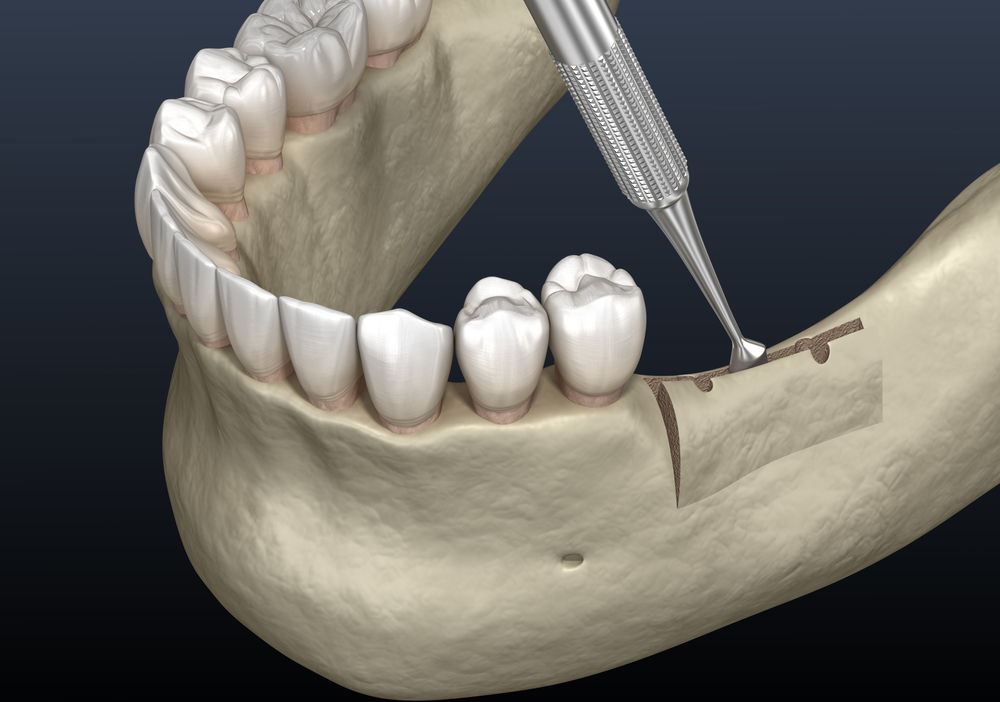 The alveolar ridge is the bony arch that forms the base of your upper and lower jaws, housing the sockets where tooth roots sit. Healthy ridge bone provides the structural support that keeps teeth stable, gives your face its natural contour, and creates the foundation that implants require.
When teeth are lost, the alveolar ridge begins to resorb rapidly. Research suggests that approximately 25% of bone width can be lost in the first year after extraction, with ongoing resorption continuing for years afterward. The result is a narrowed, flattened ridge that may no longer have the width or height needed to securely anchor a dental implant.
Ridge augmentation, sometimes called alveolar ridge reconstruction, restores this lost dimension, giving the implant a biologically sound site for osseointegration.
What Causes Ridge Resorption?
Understanding what drives ridge bone loss helps patients appreciate why timing matters in implant dentistry.
Tooth Extraction Without Socket Preservation
Every tooth root continuously stimulates the surrounding bone through chewing forces. When a tooth is removed and not replaced, the bone loses that stimulus and begins to resorb. Socket preservation grafting at the time of extraction can slow this process significantly, but when that step is skipped, the ridge deteriorates.
Advanced Periodontal Disease
Gum disease destroys the bone supporting teeth from the inside out. By the time a tooth is lost to severe periodontitis, the surrounding bone may already be severely compromised. The same bacterial infection responsible for tooth loss continues to damage the bone after extraction if not treated.
Long-term Denture Wear
Conventional dentures sit on top of the ridge and apply pressure to the bone surface rather than stimulating it from within. Over years and decades, this compressive force actually accelerates resorption, causing the ridge to shrink and dentures to become increasingly loose.
Infection or Trauma
Severe dental infections and physical injury to the jaw can result in localized bone loss that requires augmentation before restorative work can proceed.
Developmental Abnormalities
Some patients are born with anatomical variations in ridge shape or volume that make implant placement challenging without preliminary grafting.
Across all of these causes, the common thread is this: the bone needed for implants doesn’t wait. The longer the gap between tooth loss and implant placement, the more ridge reconstruction is likely to be needed.
Ridge Augmentation and Implant Candidacy
 At St. Louis County Dental, one of the most important things Dr. Barry Brace does during a $1 implant consultation is assess ridge volume using 3D cone beam CT imaging. This technology produces a highly detailed cross-sectional view of the jaw, measuring bone height, width, and density at the intended implant site with a level of accuracy that traditional X-rays simply can’t match.
When imaging reveals a ridge that’s too narrow or shallow to accommodate an implant safely, a patient will likely need ridge augmentation before implant placement can proceed. The minimum bone dimensions needed for a standard implant are approximately 6mm in width and 10mm in height, though these numbers vary based on implant diameter and the specific site.
Implants Without Ridge Augmentation
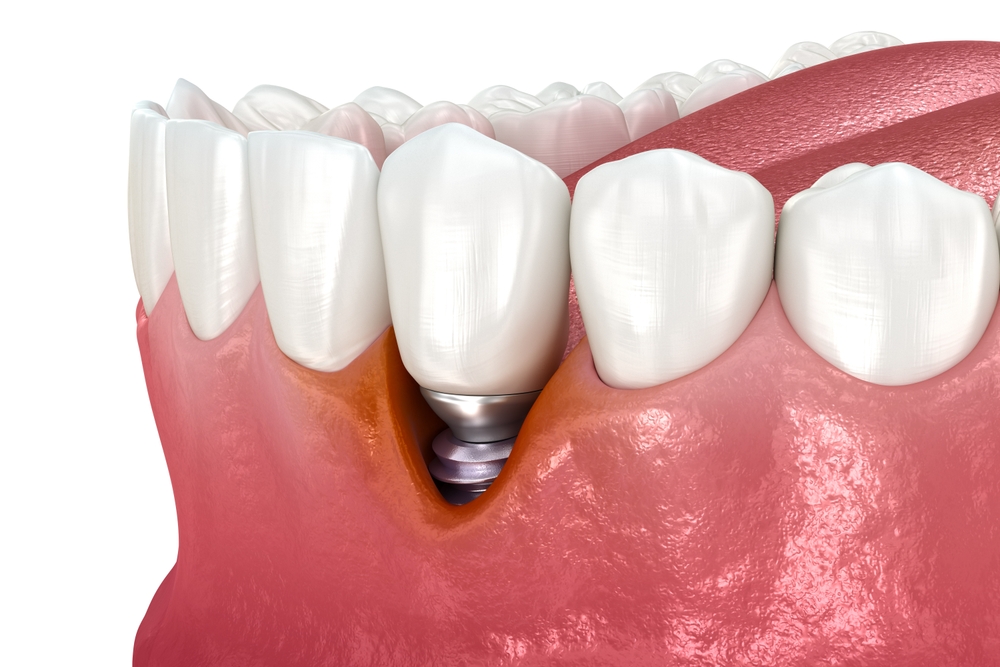
Attempting to place an implant in deficient bone is a setup for long-term dental implant failure. An implant without adequate bony support is at risk of early failure during integration, late failure as the surrounding bone continues to resorb, or aesthetic compromise as the bone around the implant disappears and gum tissue follows.
Ridge augmentation restores the bone dimension needed for predictable, long-term implant success.
How Ridge Augmentation Is Performed
 Ridge augmentation is a surgical procedure performed under local anesthesia at our St. Louis dental office. Oral conscious sedation is available for patients who prefer a more relaxed experience.
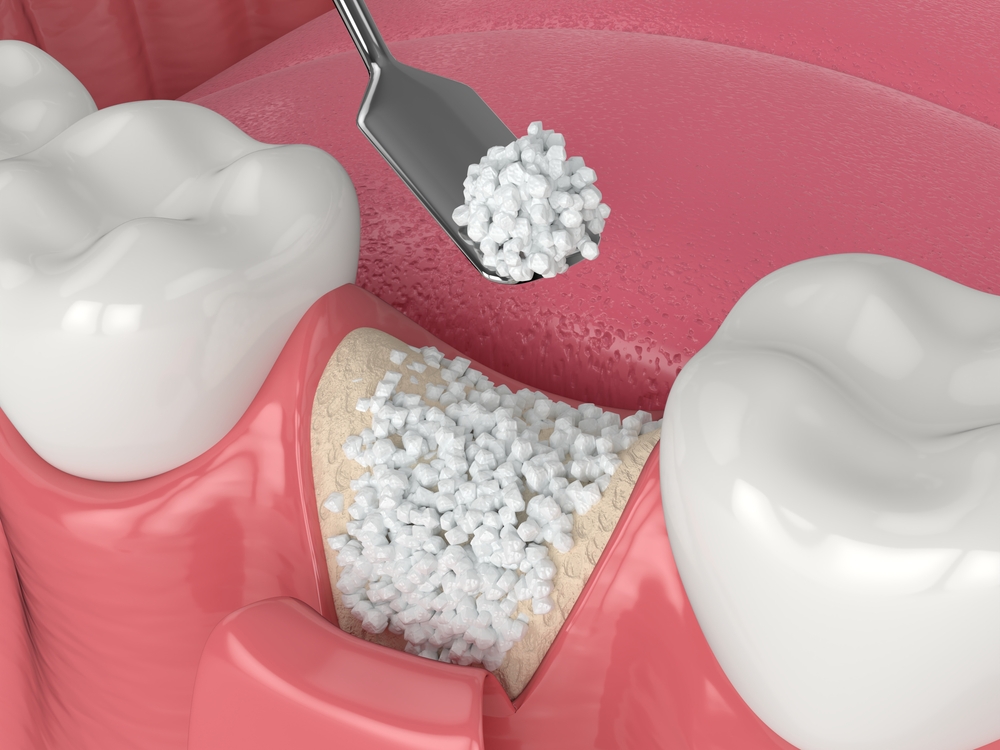
The procedure begins with a small incision in the gum tissue overlying the deficient ridge. The tissue is carefully reflected to expose the underlying bone. Bone graft material is then placed to build out the ridge to the necessary dimensions, and a membrane may be placed over the graft to protect it and guide bone regeneration (GBR).
The gum tissue is then sutured closed over the graft, and healing begins. The graft material gradually fuses with native bone over a period of several months, building a solid ridge that can support an implant long-term.
Graft Materials
- Autograft: Your own bone, harvested from another site such as the chin, ramus of the mandible, or sometimes the hip for larger defects. Offers excellent integration potential.
- Allograft: Donor bone from a human tissue bank. Widely used and well-studied, with a strong track record in ridge augmentation.
- Xenograft: Animal-derived bone (most commonly bovine) processed for human use. Often used in combination with other materials.
- Alloplast (synthetic): Manufactured bone substitutes made from hydroxyapatite, beta-tricalcium phosphate, or similar biocompatible materials. These can be particularly useful when patients prefer to avoid donor or animal-derived materials.
Dr. Brace will discuss the most appropriate graft material for your anatomy, the extent of the defect, and your personal preferences during your consultation.
Socket Preservation: The Ridge Augmentation That Happens at the Right Time
One of the most important conversations in modern implant dentistry is happening more and more at the time of tooth extraction, before bone loss has a chance to take hold. Socket preservation is a form of localized bone grafting performed immediately after a tooth is removed. Graft material is placed directly into the empty socket, a membrane is placed over the opening, and the tissue is sutured to promote healing in a way that maintains ridge dimensions.
This procedure doesn’t eliminate the need for further grafting in every case, but it significantly reduces the amount of bone loss that occurs in the months after extraction, often making full ridge augmentation unnecessary later. For patients in the St. Louis area who are facing an extraction and already planning for an implant, discussing socket preservation with Dr. Brace at the time of removal is worth doing.
Recovery From Ridge Augmentation
 Swelling and mild discomfort are expected for the first few days to a week, managed with prescribed or over-the-counter medications. A soft food diet for one to two weeks protects the graft site. Strenuous physical activity should be limited briefly to avoid disrupting the healing tissue. Smoking and tobacco use are strongly discouraged during healing, as they significantly impair bone graft integration.
Follow-up appointments with our St. Louis team allow Dr. Brace to monitor healing progress through clinical evaluation and, when appropriate, follow-up imaging. Most patients wait four to six months after ridge augmentation before implant placement, though this timeline varies based on the size of the graft and the rate of bone maturation.